

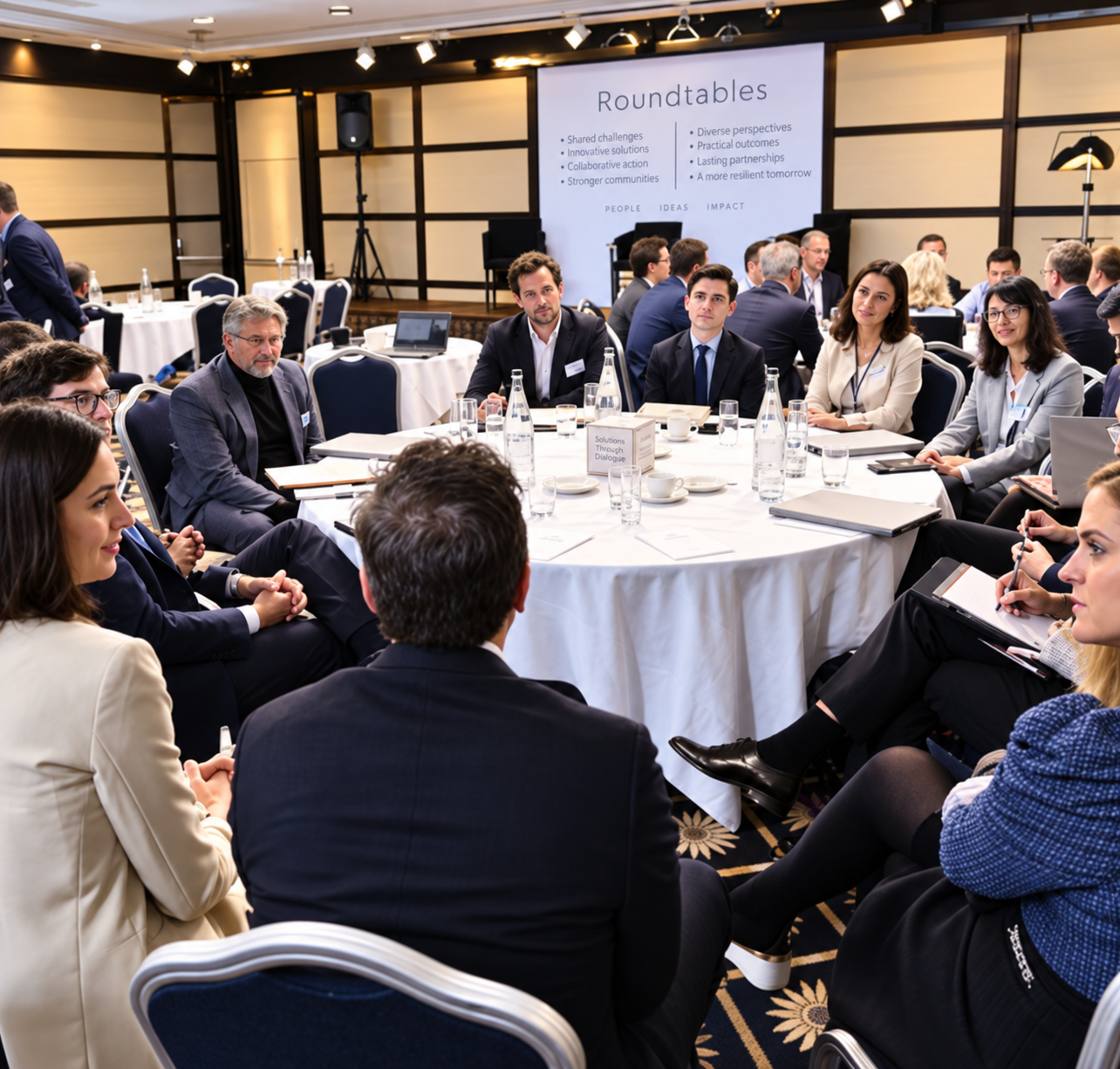
Private capital has entered a phase where the tailwinds of the past fifteen years — falling rates, expanding multiples, abundant leverage — have largely receded. At the inaugural Luxembourg LP Summit 2026, allocators, GPs and advisors spent a full day working through what that recalibration actually means in practice: for asset allocation, for artificial intelligence exposure, and for the plumbing of exits and liquidity underpinning every commitment decision.
European allocations to alternatives, excluding real estate, have risen from roughly 10% to 15% of portfolios since 2002, and 88% of next-generation principals report higher demand for the asset class. Two forces dominate the present moment: artificial intelligence, which has compressed the time and cost of compute enough to change both where new capital should go and how existing portfolios should be defended; and a structural shift in exit dynamics, with a USD 1.9 trillion exit backlog, the lowest DPI of the past five years, and the rise of continuation vehicles, NAV finance and GP-led secondaries all changing what it means to commit to a vintage.
USD 1.9 trillion exit backlog on the books · USD 115 billion GP-led volume in 2025 · 20.7% top-quartile buyout IRR
The question is no longer whether to stay in private markets, but how to recalibrate within them.
Panel One — Private Assets & Investor Needs
Moderated by Claude de Raismes, the opening panel set the macro frame against which the rest of the day was tested. Private markets have shifted from simply accessing the asset class to actively navigating it — across primaries, secondaries and direct co-investments, and across an expanding sleeve of strategies that includes infrastructure, private credit, royalties, and an increasingly evergreen and semi-liquid set of vehicles aimed at the wealth channel.
For Luxembourg-based allocators in particular, the convergence of regulatory infrastructure and a deepening LP base has made the jurisdiction one of the most observable laboratories for how private capital is being redesigned for the next decade.
- Is a private markets sleeve still designed for the cycle it sits in, or for the one that produced last decade’s returns?
- Where is allocation drifting — by sector, by geography, by vehicle type — and is that drift intentional?
- Is there a clear, written sense of what each pocket of capital is being asked to deliver: cash yield, capital appreciation, optionality, or diversification?
Panel Two — The Impact of AI in Private Capital
Moderated by David Buyck (Buyck Family Advisory Office), with panellists Diego Serrano (Sofina), Pascal Bouvier (MiddleGame Ventures) and Jérôme Wittamer (Expon Capital), this panel treated AI as a horizontal force rather than a thematic line item. For an LP, it can erode the moats of incumbents already owned, alter the valuations of comparable companies, change the cost-to-serve of management teams, and reshape exit pathways all at once.
The economics behind that shift are stark: parameter counts for trained models have grown from 117 million in 2018 to more than 1.6 trillion by 2023, a four-order-of-magnitude expansion in under five years, while per-capita cloud spend has settled at roughly USD 75 a year. Three questions sat at the centre of the discussion: whether current valuations of AI leaders are justified or reflect a lag effect that European challengers can still close; whether the capital intensity of the foundational layer is crowding out the rest of the innovation economy; and whether AI is changing how investment decisions themselves are made, by GPs, by LPs, and by the management teams of underlying portfolio companies.
Mistral AI: a live test case
The panel used Mistral AI to ground the debate in current market reality. As of early 2026 the company sits at an €11.7 billion post-money valuation following its September 2025 Series C led by ASML, with an annualised revenue run rate above USD 400 million and management guidance toward USD 1 billion in 2026 revenue. In March 2026 it raised a further USD 830 million in debt to finance 13,800 NVIDIA chips for a new data centre near Paris, and acquired Koyeb in February to anchor its sovereign cloud offering.
Set against OpenAI’s reported USD 852 billion valuation — roughly thirty-five times revenue — Mistral trades at approximately eleven times: a meaningful gap. Whether that gap closes, or reflects a structural ceiling on European challengers, was left as the open question for allocators to test against their own portfolios: where might conviction be paying for a lag-effect thesis when the underlying structure is closer to a ceiling?
Panel Three — Industry Trends Driving Allocations
Moderated by David Buyck, with panellists Shanu (Kneip Management) and Ricardo (Logiver), the closing panel took on the plumbing of exits and liquidity directly. Continuation vehicles have moved from roughly 5% of sponsor-backed exits in 2020–2021 to 13% in 2024, with industry forecasts pointing to 20% within the next few years. GP-led volume reached approximately USD 115 billion in 2025, of which continuation vehicles accounted for roughly 89%. DPI in 2025 was the lowest in a rolling five-year window, and average holding periods have extended from 6.1 years for the 2011–2020 cohort to approximately 6.6 years today — with 52% of the USD 1.9 trillion exit backlog held for more than four years.
If most LPs want to increase allocations but lack distributions to fund them, something has to give.
The panel pointed to four structural shifts worth board-level attention: the institutionalisation of GP-led secondaries; a widening dispersion between managers, with roughly a nine-point spread between top-quartile and median buyout returns over a ten-year window and the 2021 vintage spread — around 14% — the widest since 2014; a sector mix being rewritten, with infrastructure raising a record USD 289 billion in 2025 and private credit in Europe now at 34% of global volumes after 10% growth in 2025; and the risk that constrained distributions mask either skipped vintages or a forced reliance on the secondary market.
Discipline matters as much as direction.
The inaugural Luxembourg LP Summit 2026 was moderated by Claude de Raismes, David Buyck, John Holloway, Evelina Maron, Matteo Squilloni, Gildino Tavares and Laurent Zandona, and edited by Luis Galveias, Claude de Raismes and David Buyck.